
Kia Ora New Zealand
Auckland
16 nights
From
£5,499
pp


Few places in New Zealand stop you in your tracks like the West Coast glaciers. Franz Josef and Fox Glacier are two rivers of ice that flow down from the Southern Alps almost to the edge of the rainforest. They’re among the most accessible glaciers in the world, and seeing them for the first time is one of those travel moments that stays with you.
I first saw them from the air, in a helicopter we had no business being in. Here’s how that happened, followed by what we’d recommend if you want to experience them yourself.
I was backpacking around New Zealand with a friend, back when a gap year meant being away for a year and working your way around. After three months travelling, we reached New Zealand and swapped farm work for board and lodging, hitching lifts between farms with the hired hands.
One of the things I love about New Zealand is how people treat sports that come with a hefty price tag at home. Polo, sailing, surfing: Kiwis just borrow the kit and get stuck in. Some of the best polo I’ve ever seen was played by a group of teenage apple pickers near Hamilton, riding fearlessly without any of the fuss. Helicopters were much the same.
After working on a farm in the South Island, we were invited to help herd sheep from a tiny, mosquito-like helicopter. (I wasn’t flying it. I’m not that gung-ho.) It was great fun and a lot easier than doing it on quad bikes. We got to know a group of pilots who herded for a living around the South Island, and one day they invited us along as they flew to the next farm. The route took us along the Southern Alps, past the Franz Josef Glacier (Ka Roimata o Hine Hukatere in Maori) and the Fox Glacier, which is named after Sir William Fox, a 19th-century Premier of New Zealand.

What struck me most was how out of place they look. The land around them was green, and then there was this blue-white river of ice. Both glaciers flow down to roughly 300 metres above sea level, surrounded by temperate rainforest, which is remarkably low for a glacier. The Fox Glacier is fed by four alpine glaciers and ends only a few kilometres from the village, so it’s astonishingly easy to reach for something so wild. It’s a natural wonder that’s almost a little too neat, like something from a theme park, except that it’s entirely real.
During the last ice age, the ice stretched out well beyond today’s coastline, and it has retreated a long way since. A glacier is a living thing, always moving and always changing. The glaciers you see will be different from the ones I did, which is part of the appeal.
From the air, we could see the milky turquoise of the rivers and lakes fed by the meltwater. Down low, the ice is grubbier than you’d expect, as it picks up dust and dirt from the air and nearby roads, just like old snow. Higher up, it’s a completely different world: crystal-clear ice, hollows and caves that need a guide to navigate safely.
Here’s the honest bit. Our trainers and jeans were totally wrong when we landed, and walking on the ice was like trying to climb a greasy pole. You’ll need proper boots and crampons, and a guide who knows how the ice is behaving that day. Guides make the experience safer and far richer, since conditions on a glacier change constantly.
You have two main options:
A couple of things to know. The glaciers have retreated in recent years, so how you can reach the ice changes, and walking to the terminus on foot isn’t always possible. Check what’s available when you book. Helicopter flights also depend on the weather. The West Coast is one of the wettest parts of New Zealand, so we always recommend at least two nights in the area, which gives you a second chance if your flight is cancelled on the first day.
A couple of days after our flight, we went back and climbed the glacier ourselves, this time in the right kit. If you’ve skied and know that clean, sharp air at the top of a mountain, you’ll recognise the feeling: that fresh, invigorating cold that wakes up every part of you.
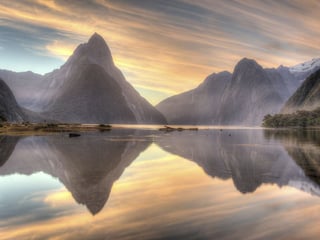
Close to Fox Glacier is Lake Matheson, and I’d put it on your list. On a calm morning, the still water mirrors Aoraki/Mount Cook and Mount Tasman so perfectly it looks like a painting. The loop walk takes around 90 minutes, and early morning gives you the best chance of still water and clear skies. Bring insect repellent, as sandflies are a fact of life on the West Coast.
One correction to a common assumption: Aoraki/Mount Cook is visible from Lake Matheson, but it isn’t close by. The village at the foot of the mountain is a long drive away, on the other side of the Southern Alps. We’d recommend visiting it as a separate highlight of your trip, ideally with a night or two there.
The West Coast rewards a slower pace. The roads wind, the scenery pulls you in and the glacier villages are small and quiet. We’d suggest combining it with Queenstown or the lakes on a longer South Island itinerary. You can also reach the coast by rail on the TranzAlpine from Christchurch to Greymouth, then continue south by road.
Read more about the area on our West Coast page, or explore the wider South Island holidays.
We’ve been planning New Zealand trips for UK travellers for over two decades, and we know how to build in the flexibility the West Coast needs. A few ways to start:
What is the difference between Fox Glacier and Franz Josef Glacier?
They’re neighbours, about 25 kilometres apart, and both flow from the Southern Alps through rainforest. Franz Josef is the more famous of the two, while Fox Glacier is generally quieter. Many visitors see both, and the experience is similar.
Can you walk on the glaciers?
Yes, but only with a guide and the right equipment. Helicopter and heli-hike trips are the most common way, and operators provide boots and crampons. How you reach the ice can change as the glaciers retreat, so check current options when booking.
When is the best time to visit the glaciers?
Flights and hikes run year-round, and the glaciers look different in each season. Summer (December to February) has the warmest, longest days, but the West Coast gets rain at any time of year, so build in spare days.
How many days do you need on the West Coast?
We’d suggest at least two nights. That gives you a backup day if the weather stops flights, and time to visit Lake Matheson as well.
Is Aoraki/Mount Cook close to the glaciers?
Not really. You can see it reflected in Lake Matheson on a clear day, but Aoraki/Mount Cook Village is a long drive away on the other side of the mountains. We’d plan it as a separate stop on your itinerary.


Sign up to our newsletter
Be the first to know about our exclusive offers and holiday inspiration by email.