

13 nights
From
£3,499
pp

We've been sending travellers to New Zealand for over two decades, and if there's one thing our New Zealand specialists agree on, it's this: photographs never quite capture it. You can see a hundred pictures of Milford Sound and still catch your breath the first time you're standing in it, dwarfed by cliffs that seem to lean in over the water. New Zealand does that to people. From glaciers you can walk inside to penguins so shy you'll need a guide who knows exactly where to look, this is a country built for slow, wide-eyed exploration.
Below are the wonders and wildlife encounters our team returns to again and again when planning New Zealand holidays for clients — the ones that make people ring us up afterwards just to say thank you.

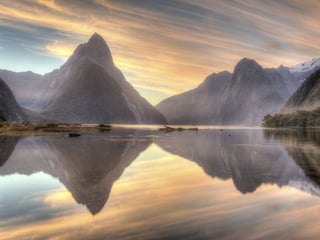
Rudyard Kipling called Milford Sound the "Eighth Wonder of the World," and honestly, we've never heard anyone disagree once they've been. Tucked into Fiordland on the South Island's west coast, it's a place where the cliffs genuinely do rise straight out of black, still water — the kind of dark that makes the waterfalls tumbling off the rock faces look almost silver by contrast.

Our advice, gathered from years of booking this exact trip: go by kayak. Paddling gives you the mist of the falls on your face and a low, quiet vantage point that no cruise boat can match — you'll often drift within touching distance of fur seals hauled out on the rocks. If a relaxed cruise suits your group better, that's no lesser experience; some of our escorted itineraries even include an overnight cruise on the Sound itself, so you can watch the light change on the cliffs at dusk and dawn. One honest tip: weather in Fiordland is genuinely unpredictable, and rain actually makes the waterfalls more spectacular, not less — so don't let a grey forecast put you off booking. Milford Sound features on several of our escorted South Island tours, including the Spirit of New Zealand.

The South Island is home to two of the most accessible glaciers on Earth, Franz Josef and its neighbour Fox, and we always tell clients this is worth building real time into an itinerary for. From Franz Josef township, a gentle 90-minute walk brings you close enough to feel the cold air rolling off the terminal face — but the heli-hike is the experience that stays with people. You lift off from the valley floor, and within minutes you're looking down at crevasses and pinnacles of blue-white ice that simply don't look real from the ground. The pilot sets down directly on the glacier, and your guide leads you between towering ice walls and, if conditions allow, through narrow ice tunnels carved by summer meltwater. Go early in the day if you can — cloud tends to roll in over the Southern Alps by early afternoon, and a clear morning flight gives you the best chance of those postcard views. Franz Josef appears on several of our West Coast tours, often paired with a scenic drive along the Haast Pass.

New Zealand is the only place on the planet you'll find Arachnocampa luminosa, the New Zealand glowworm, and a visit to Waitomo on the North Island is one of those "you had to be there" moments. The caves themselves are worth the trip for the limestone formations alone, but it's the boat ride through the Glowworm Grotto that people remember for years afterwards: engines cut, complete silence, and thousands of tiny blue-green lights overhead like an upside-down starfield.
A good guide will walk you through all three levels, including the Banquet Chamber, where you can still see smoke staining the ceiling from early tourists who used to picnic there. The final stretch, a quiet boat glide through a cave system that began forming more than 30 million years ago as limestone on an ancient seabed, is genuinely humbling. We'd always recommend booking the guided tour rather than trying to see the caves independently; access is tightly managed to protect the glowworms, and a knowledgeable guide adds context you simply won't get on your own. Waitomo features on our New Zealand Wonderland tour.

Kaikoura, on the South Island's east coast, is one of only a handful of places on Earth where sperm whales can be spotted year-round, and the reason comes down to geography: a canyon plunging more than a mile deep runs right alongside the coastline, creating currents that pull nutrient-rich water up from the depths. That upwelling feeds an extraordinarily rich marine food chain, and the whales simply never need to leave.
Depending on the season, you might also see southern right whales, humpbacks, orca, or the endangered Hector's dolphin — one of the smallest and rarest dolphin species in the world, found nowhere else. Fur seals are a near-certain sighting too, often lounging on rocks right at the water's edge in town. Our honest advice: book your whale-watching excursion for the morning where possible, as sea conditions tend to be calmer, and afternoon cancellations due to swell aren't uncommon. Kaikoura is an easy, worthwhile detour if you're self-driving the east coast between Christchurch and Picton.

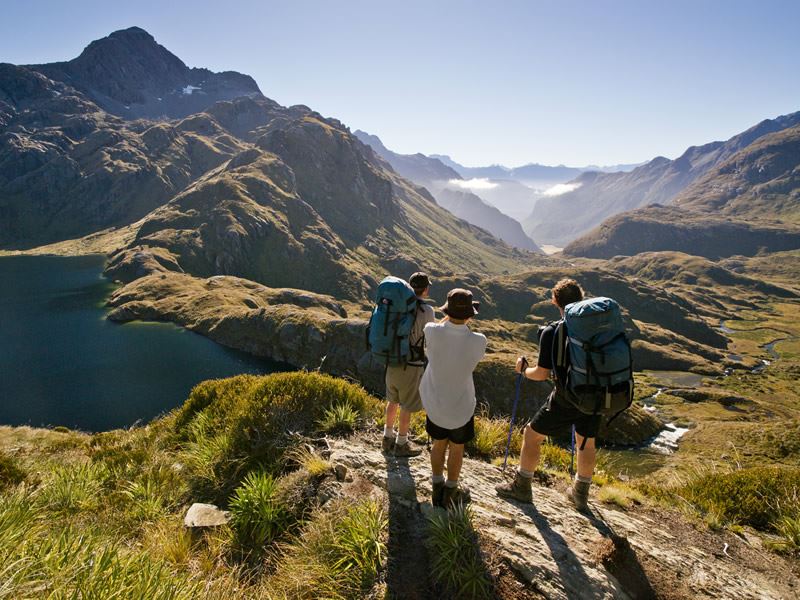
If you want one hike that sums up how strange and beautiful New Zealand's volcanic landscape can be, this is it. The Tongariro Alpine Crossing, in Tongariro National Park, is regularly ranked among the best single-day hikes anywhere in the world, and having sent countless clients on it, we understand why. The roughly seven-to-eight-hour crossing takes you from the Mangatepopo car park up through dense forest, past Taranaki Falls, and across old lava fields from eruptions centuries past, before climbing to the summit of Red Crater - the highest point on the route, where sulphur steam still drifts from the rock.
From there, the trail drops down to the Emerald Lakes, their almost unnatural turquoise-green colour caused by minerals leaching from the surrounding thermal area. A word of honest guidance here: this is a serious alpine day walk, not a gentle stroll, and weather on the mountain can turn quickly even in summer — proper boots, layers and a genuine wet-weather plan are non-negotiable. It's best tackled between late October and April; outside that window, snow and ice make it a mountaineering route requiring specialist equipment.
Along the Coromandel Peninsula's east coast, Hot Water Beach offers one of the more delightfully DIY experiences you'll have anywhere. Within about two hours either side of low tide, geothermally heated water bubbles up through the sand, and with a hired spade (or borrowed one — locals are generous) you can dig your own private pool right on the beach. Timing really is everything here; arrive at the wrong tide and you'll just be digging in wet sand for nothing, so it's worth checking the tide tables for that day before you set off. Go at sunrise if you can manage it — the beach is far quieter, and there's something wonderful about soaking in your own hot pool while the sky turns pink over the Pacific.
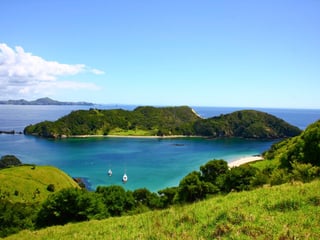
The Bay of Islands, a scattering of over 140 islands and hidden bays on the North Island's east coast, is one of our most-booked regions for good reason — it photographs beautifully, but it's even better experienced from the water. Day sailing trips typically include time to snorkel and kayak, and it's common to have bottlenose or common dolphins ride the bow wave of the boat.
In Paihia, the Dolphin Eco Experience gives you the rare chance to swim near wild dolphins — though we always brief clients that this is genuinely wildlife-led, not a guaranteed swim, and boats follow strict guidelines that mean you should never touch or chase the animals. That's part of what makes it special: you're a guest in their environment, not the other way around. The Bay of Islands is a highlight on our New Zealand Getaway tour, where you'll overnight in the region with time built in for exactly this kind of excursion.

Just north of Auckland, and only about ten minutes from Whangarei's city centre, this is widely considered one of the most photogenic waterfalls in the country — and it's genuinely easy to reach, which makes it a lovely stop if you're driving north towards the Bay of Islands. A classic curtain of water drops close to 80 feet over dark basalt cliffs into a swimming pool below, framed by native bush. Two viewing platforms give you different angles, and locals will tell you the light is best in the late afternoon, when the sun catches the falls from the west.
The Taupo Volcanic Zone, running through the central North Island, is one of the most geothermally active places on the planet, and Rotorua is its beating (and occasionally smelling) heart. The Waimangu Valley — reshaped entirely when Mount Tarawera erupted in 1886, burying three Maori villages — is now a self-guided walk past the Cathedral Rocks, the Waimangu Cauldron, and Lake Rotomahana, a genuinely steaming lake. Look out for Maori rock carvings near the lake, a quiet reminder of the area's history before the eruption.
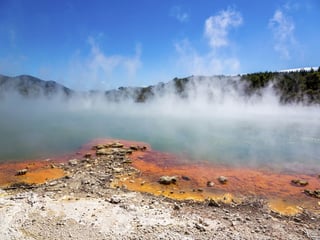
Nearby, at Wai-O-Tapu, the Champagne Pool is the star attraction — a roughly 200-foot-wide spring rimmed in burnt orange, formed by a hydrothermal eruption some 700 years ago, with carbon dioxide bubbling gently at the surface. We'd suggest visiting Wai-O-Tapu first thing in the morning, both to beat the coach tour crowds and because the geysers and pools are timed to specific opening events — check ahead so you don't miss them.

The hoiho, or yellow-eyed penguin, is one of the rarest penguin species on Earth, and the Otago Peninsula near Dunedin is one of the few places you can reliably see them in the wild. These are famously shy birds, so a good guided tour matters here more than almost anywhere else on this list — operators like Penguin Place use covered tunnels and hides so you can watch and photograph the penguins, along with fur seals and sea lions, without disturbing their natural behaviour. Profits from these tours typically go straight back into the conservation work protecting the species, so it's a wildlife encounter you can feel genuinely good about. Dunedin, with its castle and Scottish heritage, makes a lovely two-night stop on a South Island self-drive.

Stewart Island — Rakiura in Maori, meaning "the land of glowing skies" — sits about 15 miles off the South Island's southern tip, and it's one of the very few places in the world where you have a genuine chance of seeing the aurora australis. Sightings depend on solar activity and clear, dark skies, so we're always honest with clients: it's a bonus, never a guarantee. What is guaranteed is a wonderfully remote island with a population under 400, dense native bush, and some of the best birdwatching in the country. Even without the aurora, it's a memorable detour for anyone who wants to feel genuinely off the beaten track.
On the wild west coast of the South Island, Punakaiki's Pancake Rocks are exactly as strange as they sound — layered limestone formations, stacked like stone pancakes, formed over 30 million years from marine sediment compressed on the seabed and later lifted and sculpted by wind, rain and seismic activity. Time your visit for high tide and a decent swell, and the blowholes here put on a genuinely dramatic show, sending spray several metres into the air. The walking loop takes well under an hour, which makes this an easy, high-impact stop if you're driving the West Coast between Franz Josef and Nelson.
Whakaari, better known as White Island, is New Zealand's most active volcano, sitting around 30 miles off the Bay of Plenty coast. It's privately owned, accessible only by guided boat or helicopter, and tours typically include a walk across the crater floor past steaming vents. We'd be doing you a disservice not to be upfront here: this is an active volcanic site, and access has been restricted at times following past volcanic activity, so availability can change and safety briefings are taken seriously by operators. If a full walking tour isn't running, flyover-only options give you a spectacular view of the crater without setting foot on the island.

Around two hours from Wellington, set within 942 hectares of native forest, Pukaha is home to the only white kiwi in captivity in New Zealand, alongside kakariki (native parakeets), kokako, and tuatara — a reptile species that's been around, essentially unchanged, since the age of the dinosaurs. It's a wonderful, unhurried stop if you're travelling between Wellington and Hawke's Bay, and a good way to see kiwi up close in a setting focused on genuine conservation rather than spectacle.
For many of our clients, it was the trilogy that first put New Zealand on the map, and Glenorchy — at the gateway to Mount Aspiring National Park — delivers those landscapes in the most immersive way we know: on horseback. You'll ride out among turquoise lakes and the soaring peaks of the Southern Alps, through valleys used for numerous filming locations. It's a gentle, scenic ride suited to most fitness levels, and an easy half-day addition to any Queenstown stay.
Ready to see it for yourself?
We've spent over twenty years curating New Zealand itineraries, and if there's one thing we'd say to anyone planning this trip: don't try to see everything in ten days. New Zealand rewards a slower pace and the kind of local knowledge that only comes from having done this hundreds of times before — knowing which glacier flight to book for clear skies, which lodge has the best view of Lake Wakatipu, or exactly when to turn up at Wai-O-Tapu.
Browse our full range of New Zealand tours, explore South Island itineraries built around Milford Sound and Queenstown, or speak to one of our New Zealand specialists about a tailor-made trip designed entirely around what matters to you.
When is the best time to visit New Zealand?
New Zealand's seasons are the reverse of the UK's, so its summer runs December to February and is the most popular (and busiest) time to visit. For hiking the Tongariro Alpine Crossing or visiting Hot Water Beach, aim for shoulder season — October/November or March/April — when the weather is still settled but the crowds and prices ease off.
How long do I need to see both islands properly?
We'd recommend a minimum of 16-18 nights to cover both the North and South Islands without feeling rushed, and that's before factoring in flight recovery time. If you only have two weeks, we'd usually suggest focusing on one island rather than trying to squeeze in both.
Is New Zealand a good destination for wildlife lovers specifically?
Yes, and it's one of the reasons we love sending clients there. Between whale watching in Kaikoura, yellow-eyed penguins near Dunedin, dolphins in the Bay of Islands, and rare native birds like kiwi and kakariki, few destinations pack in this much genuine, accessible wildlife encounter within a single trip.
Do I need to book glacier and cave tours in advance?
For popular experiences like the Franz Josef heli-hike and Waitomo Glowworm Caves, yes — these have limited daily capacity and sell out, particularly in peak summer. Booking these as part of a pre-arranged itinerary with us takes the pressure off having to chase availability yourself once you've landed.
Is a self-drive or an escorted tour the better way to see New Zealand?
It genuinely depends on you. Self-drive tours suit travellers who want flexibility and don't mind driving (New Zealand's roads are scenic but can be narrow and winding), while escorted tours are ideal if you'd rather sit back, let a local guide handle the logistics, and travel with company. We offer both, and our team can talk you through which fits your travel style best.


Sign up to our newsletter
Be the first to know about our exclusive offers and holiday inspiration by email.