
13 nights
From
£3,499
pp

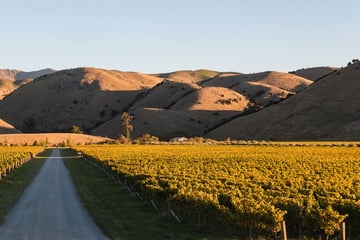
There's no single "right" way to see New Zealand, and after two decades of sending British travellers there, we've learned that the best trip is the one that matches how you like to travel. Some of our guests want the freedom of an open road and no fixed plan. Others want a motorhome parked up beside a lake at sunset with the kettle on. And plenty prefer to sit back, let an expert local guide do the driving, and simply take in the view. Whichever way you go, New Zealand rarely disappoints – but each style of holiday changes the trip in ways that are worth knowing before you book.
Here's our honest breakdown of what to expect from each option, the accommodation available, and some of the destinations we always recommend building into an itinerary.

A self-drive touris the classic way to see New Zealand, and it's still our most popular choice for good reason. You set the pace entirely. Provided you hold a valid driving licence from your home country, you can legally drive in New Zealand for up to 12 months – you'll just be on the left, which most Brits pick up within a day or so.

As Chris, our New Zealand Product Director, puts it: "It's very easy driving. Roads are generally very quiet with loads of stop-off points along the way." The one place worth planning around is Auckland during rush hour – everywhere else, the roads open right up. Parking is largely free too, aside from a handful of busier spots like central Queenstown.
Our advice, built from years of getting this wrong ourselves early on and right ever since: don't book your first night behind the wheel. Spend a day or two in your arrival city shaking off the jet lag before you set off, because New Zealand's roads are more demanding than they look on a map – narrow, winding, and made for stopping every twenty minutes for a photo you didn't know you needed. And resist the urge to cram in too many one-night stops. Chris always tells our clients: "We always say – stay in fewer places and see more. Three nights minimum wherever you can, two at a push. Take your time and really get to know the areas you're staying in."
You'll have a good range of hire cars to choose from, from compact, fuel-efficient runabouts that make mountain roads far less stressful, through to hybrids and SUVs, which are becoming increasingly available. The real joy of self-driving is the freedom to change your mind. Plenty of our guests arrive in Queenstown planning two nights, then decide on day one that they simply must fit in a jet boat ride or a flightseeing trip over Milford Sound – and on a self-drive, you can just do it.
Nearly all our self-drive travellers cross both islands via the inter-island ferry from Wellington to Picton, either driving straight on or dropping the car and picking up a new one the other side. We'd always encourage seeing both – the North and South Islands genuinely feel like two different countries.
If self-driving is freedom, a motorhome holiday is freedom with a kettle, a bed and a view attached. It's an apartment on wheels, and it means you can wake up beside a glacier-fed lake or tucked into native bush without paying resort prices for the privilege. New Zealand has thousands of campgrounds scattered across the country, many in spots that hotel and B&B guests simply never see, because the roads there are only really practical if you're bringing your accommodation with you.

There's a real range of vehicles depending on your group size and how much comfort you want. Smaller campervans suit couples happily sleeping two or three, while six-berth motorhomes work well for families or groups of friends. Some 4WD options come with a slide-out kitchen and even a portable solar shower for the more adventurous routes, while the premium end of the fleet brings full kitchens, slide-out barbecues and proper living space for evenings parked up with a glass of Marlborough sauvignon blanc. Every motorhome comes fully equipped with cookware, linen and bedding, so you're genuinely ready to go from day one – and you'll also be handed a road map marked with the best stops, plus a campground guide, so you're never navigating blind.
Cooking your own meals most nights also makes a real dent in your daily budget compared with dining out for breakfast, lunch and dinner throughout a three-week trip – something worth factoring in if you're weighing up the true cost against a hotel-based holiday.
An escorted tour is the option we'd recommend to anyone who wants to see as much of New Zealand as possible without spending a single minute worrying about logistics. We offer everything from Classic coach tours through to Superior and Deluxe itineraries staying in 4-5* hotels, each with a dedicated guide and driver throughout.

The real value here isn't just convenience – it's access. Our guides are handpicked for their local knowledge and genuine passion for the country, and they'll often bring you into experiences you simply couldn't book yourself: a behind-the-scenes look at a Marlborough winery, or a Maori cultural performance that means far more with proper context than it would as a solo tourist wandering in cold. You're not driving those winding coastal roads exhausted after a long-haul flight, either – you get to watch Fiordland or the Kaikoura coastline go by instead of concentrating on hairpin bends, with most coaches equipped with Wi-Fi so you can share photos home in real time.
It's also a genuinely social way to travel. We see a lot of solo travellers choose escorted tours for exactly this reason – you get plenty of quiet time to yourself, but also the company of fellow travellers if you want it. And contrary to what people assume, escorted tours are often better value than expected, since tour operators buy accommodation, meals and activities in bulk – so you know your costs upfront, with no guesswork about what dinner in Queenstown is going to cost you that night.

Whichever style you choose, we'd always suggest allowing at least three weeks to do both islands justice – New Zealand is deceptively large, and it rewards those who don't rush it.
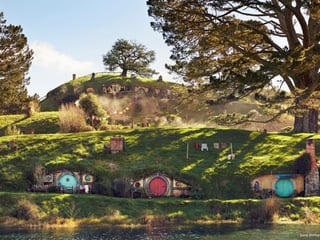
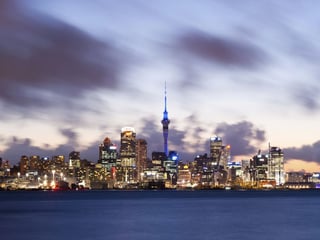
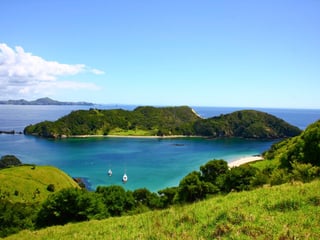
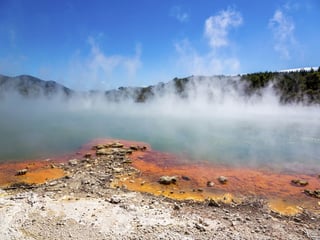
Most itineraries begin in Auckland, the main international gateway, before heading north to the Bay of Islands for sailing and dolphin watching, or out to the Coromandel Peninsula to dig your own natural spa pool at Hot Water Beach – a properly odd, brilliant experience best timed around low tide. From there, Rotorua brings the geothermal drama of the Wai-O-Tapu Thermal Wonderland, plus the inevitable pilgrimage to the Hobbiton film set for Tolkien fans. The North Island leg usually ends in Wellington, where Cuba Street's cafés and street performers are worth an evening, and the cable car up to the botanic gardens gives one of the best views in the city.

Cross by ferry to Picton, then head to Kaikoura on the east coast – sperm whales are spotted here year-round, alongside dusky dolphins and fur seals. Christchurch is worth a proper stop too: the heritage tram, the rebuilt Canterbury Museum, and New Regent Street's café scene all reward slowing down. Then it's inland to Mount Cook National Park, where the view across Lake Pukaki's improbably turquoise water to Aoraki/Mount Cook is one we've genuinely seen stop people mid-sentence. Dunedin is home to the world's only mainland royal albatross colony and a good chance of spotting rare yellow-eyed penguins.

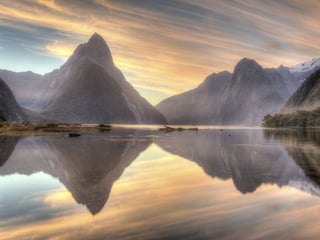
Further south, Fiordland National Park and Milford Sound offer some of the most dramatic scenery anywhere in the country – dolphins, seals and penguins are common sightings on a cruise through the fjord. Queenstown, the self-styled Adventure Capital, is worth building real time around rather than rushing through, whether that's hiking, jet boating or bungy jumping. In Franz Josef, a helicopter flight followed by a guided walk onto the glacier itself is unforgettable. And for the journey back to Christchurch, the TranzAlpine train is genuinely one of the great rail journeys of the world, tracking the West Coast through the Southern Alps.

Flights to New Zealand typically run upwards of 23 hours including a connection, so a stopover isn't just a nice extra – it's a genuinely smart way to break the journey and land feeling human. Fiji, made up of more than 330 islands, sits around three hours before Auckland or four before Christchurch, and is hard to beat for white sand and a properly slow pace. If you want to see more than one beach, our 4-night Wanderer Cruise takes in several islands with an authentic Fijian feast and kava ceremony included.
The Cook Islands, around 4.5 hours from Auckland, are another favourite of ours – 15 islands surrounded by some of the clearest water in the Pacific. Aitutaki in particular photographs beautifully but never quite captures how strikingly turquoise the lagoon actually is in person. The 7-night Aitutaki Lagoon Resort & Spa is a lovely way to unwind before continuing on to New Zealand.
Other popular stopover options include Sydney, Melbourne, Dubai, Bangkok, Hong Kong, and San Francisco or Los Angeles.
New Zealand's accommodation scene ranges from working farm stays to some of the finest lodges in the southern hemisphere – there's a fit for every kind of trip.
Luxury lodges: The Lodge at Kauri Cliffs, set across 6,000 acres near Matauri Bay in the Bay of Islands, has been named the No.1 resort in New Zealand and Australia by Travel + Leisure – think clifftop golf, ocean views from every room and, in the Owner's Suite, a private infinity pool.

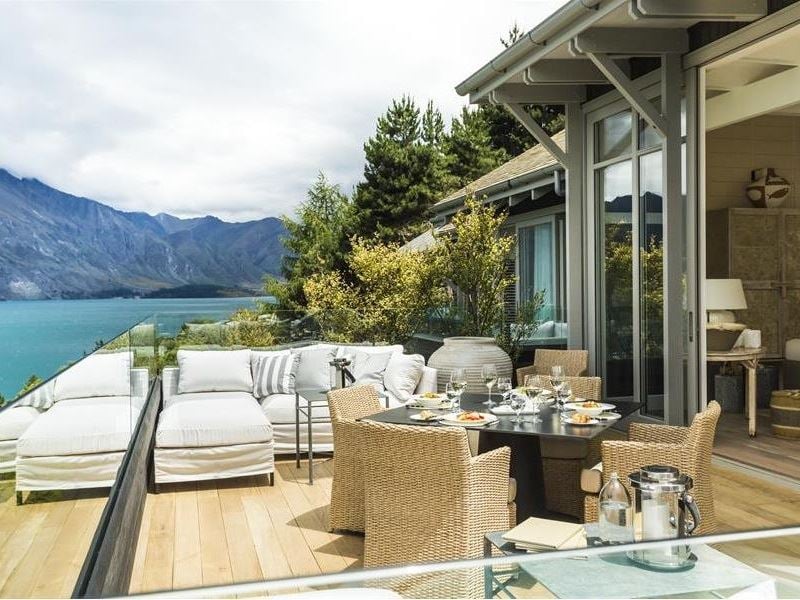
On the South Island, Azur Lodge sits on a hillside above Lake Wakatipu, just a couple of miles from central Queenstown, with villas looking straight out over the lake and the Remarkables.

Boutique hideaways: Browns Boutique Hotel is a small, quiet Queenstown property a short walk from the centre, with lake and mountain views from every room. In Marlborough wine country, The Peppertree is an elegant Edwardian villa with just five suites – an intimate choice for couples wanting somewhere properly quiet after the road.

Hotels: The Farm at Cape Kidnappers in Hawke's Bay is a working 6,000-acre farm with its own vegetable garden supplying the kitchen, an 18-hole course and sweeping ocean views. For something more relaxed and better value, The Millennium on Lake Rotorua is clean, comfortable and well located, with lake-view balconies in many rooms.

Which is cheaper – self-drive, motorhome or an escorted tour?
It depends on your style of travel as much as the price tag. Motorhomes often work out most cost-effective because you're cooking most of your own meals and camping rather than paying for hotels every night. Escorted tours can look pricier upfront, but because accommodation, many meals and activities are bought in bulk and included, the final cost is often more predictable – and sometimes comparable to a self-drive once fuel, parking and dining out are added up.
Do I need an international driving permit to self-drive in New Zealand?
A full, valid driving licence from your home country lets you drive legally in New Zealand for up to 12 months. It's always worth carrying your licence with you and checking current requirements before you travel, as rules can vary depending on your nationality and licence type.
How long do I need for a New Zealand holiday?
We'd recommend at least three weeks if you want to properly cover both the North and South Islands without feeling rushed. Shorter trips of 10–14 nights work well if you focus on one island, but most of our guests tell us they wished they'd built in more time, not less.
Is a motorhome holiday suitable for families?
Yes – many of our motorhome itineraries are designed with families in mind, with six-berth vehicles offering enough space for parents and children, full kitchens for easy meals, and the flexibility to stop whenever little legs (or patience) need a break.
When is the best time of year to visit New Zealand?
New Zealand's seasons run opposite to the UK's, so their summer (December to February) is the warmest and busiest period, ideal for hiking and coastal exploring. Shoulder seasons – March to May and September to November – tend to offer quieter roads, lower prices and still-reliable weather, which is often our recommendation for self-drive and motorhome trips in particular.

Sign up to our newsletter
Be the first to know about our exclusive offers and holiday inspiration by email.